The Autolejek story

About the project

From a simple idea to an intelligent liquid dispensing system.

YouTube · @autolejekVisit the Autolejek YouTube channel
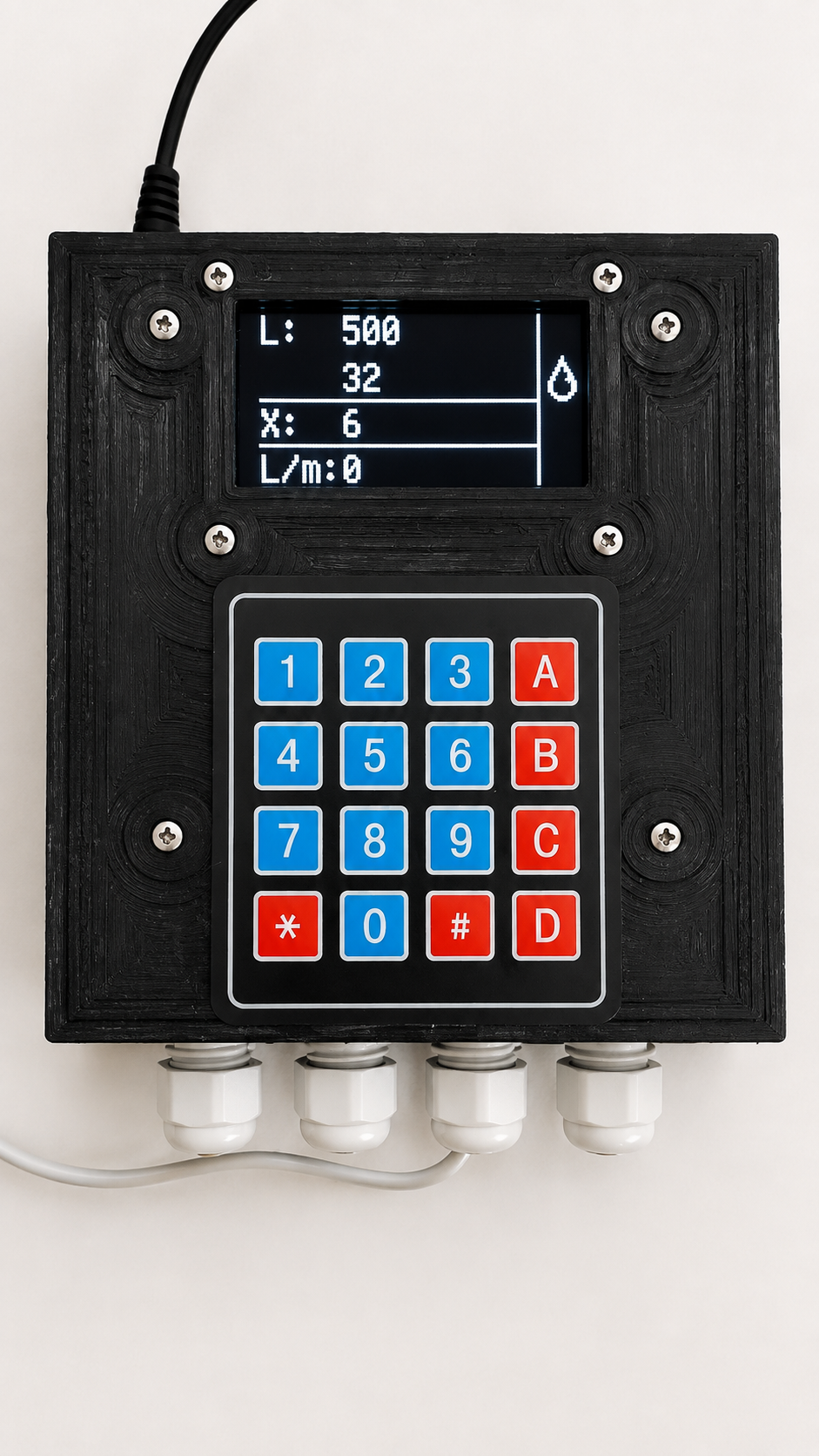
Autolejek controller showing dosing progress with a 500-litre target and 32 litres dispensed

Autolejek in practice

The project at a glance

Open a topic to see what the system is, how it works, and where it can be used.

What exactly is Autolejek?

Autolejek is an automatic liquid measuring and dosing system project tailored to a particular installation. It combines controls with a flow meter and a valve or pump. The user specifies the required volume, and the system controls filling based on measured flow.

How does it work?

The flow meter sends pulses as liquid moves through the installation. Autolejek counts them, displays the measured volume, and controls a valve, electric pump, or compatible pump shut-off system. It therefore dispenses an actual volume even when the installation's flow rate changes during operation.

Where can it be used?

Autolejek is suited to processes that require repeatable liquid measurement, automatic flow shut-off, and installation monitoring.

Automatic tank filling

It dispenses the selected amount of liquid, then closes a valve or stops the pump.

  • field and orchard sprayers
  • IBC containers
  • liquid bowsers and tankers
  • street-watering and street-cleaning vehicles
  • tanks on agricultural, construction, and cleaning machinery
  • animal drinkers and liquid tanks
  • buffer and retention tanks
  • campervan and boat tanks
  • pools, hot tubs, and ponds

Measuring liquid for mixtures

In this group of applications, the device can provide:

  • metering base liquid for preparing spray solutions
  • metering liquid for preparing fertilisers and fertigation solutions
  • metering liquid for preparing liquid feed
  • metering water for preparing concrete, mortar, plaster, and screed
  • metering liquid for preparing cleaning and disinfecting solutions

Controlled irrigation

It delivers a measured portion of liquid to:

  • greenhouses and polytunnels
  • field crops and orchards
  • plant nurseries
  • gardens and garden centres
  • urban trees and flower beds
  • lawns, sports pitches, and recreational grounds

Controlled liquid transfer

It transfers a preset volume of liquid:

  • from a well to a tank
  • between tanks
  • from a hydrant to a bowser
  • from a retention tank to an installation
  • into an installation before pressure testing or flushing

Liquid distribution and records

Autolejek can serve as a simple liquid dispensing point to:

  • dispense a specified number of litres
  • control liquid drawn from a hydrant, well, or tank
  • measure use in a field, greenhouse, or individual job
  • record the number and volume of fills
  • support accounting between workers, customers, or farms

Installation protection

Using flow measurements, it can:

  • detect a lack of liquid
  • identify a pump failure
  • detect a closed valve or blocked pipe
  • respond to excessively low or high flow
  • reduce the risk of overfilling a tank
  • protect a pump against running without flow

Where it began

Because someone had to keep an eye on the water

A practical problem became a rough prototype, then grew into a complete system.

How it started

From time to time, instead of going to school, I would skip class and visit my uncle to drive a tractor — a much more interesting activity.

One day, he asked me to watch the sprayer while he filled it with water. Out of laziness, I decided this made no sense — why stand there watching how much water had gone in when I could be driving a tractor?

So I decided to build something that would fill the sprayer automatically. The first prototype was nothing impressive: an etched PCB, rough soldering, and, most importantly, the entire control panel mounted on a piece of wood. But it worked.

From prototype to a finished system

After a few years, I decided to rebuild the project from scratch — professionally this time.

In the meantime, I gained knowledge, graduated from university, and today I write code professionally. And it all started with watching the water.

Next page: Build it yourself